
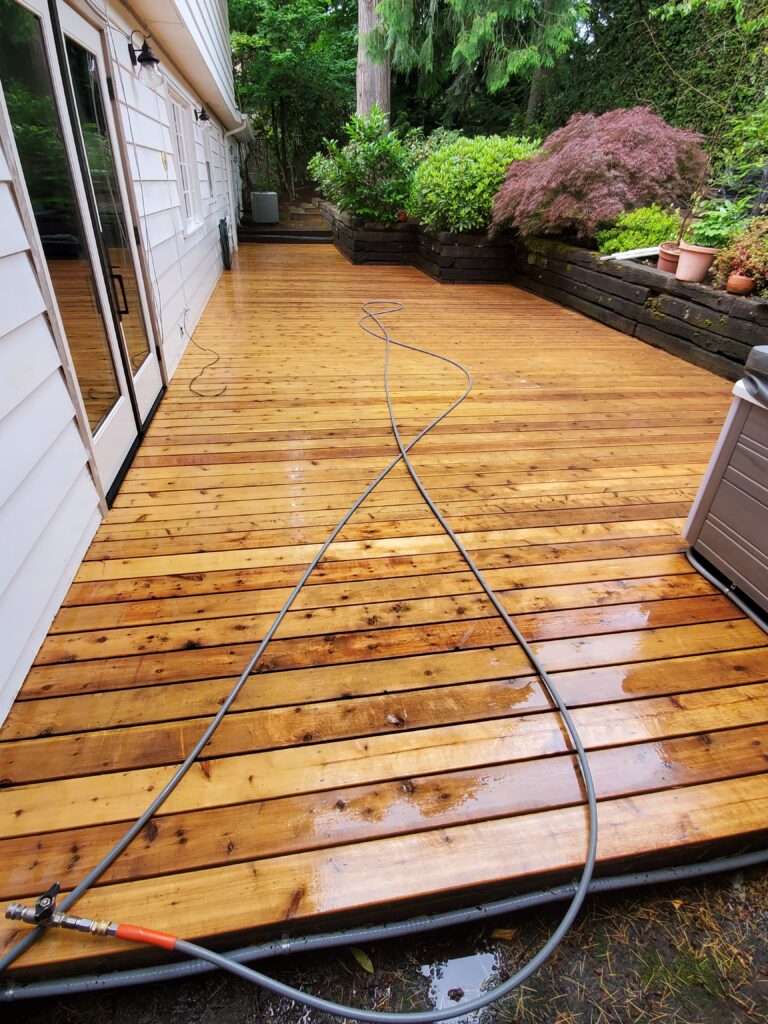
Softwash vs. High Pressure Washing: What Homeowners Need to Know
Many homeowners assume “pressure washing” always means blasting grime away with high PSI. In reality, the safest and most effective cleaning method depends on the surface. In this guide, we’ll break down what softwashing is, when high pressure is appropriate, and how to avoid common (and expensive) damage.
Why the Difference Matters
It’s totally understandable to mix up softwash and high pressure cleaning—most people don’t find out there’s a difference until something gets damaged. But if you’re washing your own property (or hiring someone), it’s critical to know when high pressure is simply too much.
The rule of thumb is simple:
- High pressure is best reserved for hard surfaces like concrete.
- Softwash is the safer choice for delicate surfaces like house siding and decking.
- High pressure should never be used on most siding or wood.
What Is Softwashing?
Softwashing is a pressure washing best practice designed to clean surfaces that would otherwise be damaged by higher-pressure methods. Instead of relying on force, softwashing uses the right cleaning solution, proper dwell time, and a gentle rinse to remove mold, mildew, and algae.
In most softwash applications, the pressure coming out of the hose is generally under 500 PSI, which is considered low pressure.
When High Pressure Is (and Isn’t) Appropriate
Good Uses for High Pressure
- Concrete driveways
- Sidewalks and walkways
- Some stone and pavers
- Heavily soiled hardscape areas
Surfaces That Should Not Be Hit with High Pressure
- Vinyl siding
- Wood siding
- Decking
- Painted surfaces
- Older brick or mortar
High pressure can work too aggressively and cause damage that may not be visible right away.
How the Softwash Process Works
- Apply detergent: A cleaning solution is applied to break down mold and mildew.
- Dwell time: The solution is allowed to penetrate problem areas.
- Low-pressure rinse: Grime is rinsed away safely.
- Final rinse: A second rinse may be applied if needed.
You can clean extremely well without high pressure when it’s done correctly.
Benefits of Softwashing
- Reduces risk of surface damage
- Kills organic growth at the root
- Ideal for siding, decks, and fences
- Improves curb appeal safely
Final Thoughts
Softwashing proves that high pressure is not always the best solution. Using the right method protects your home while delivering longer-lasting results.